The Italian Job


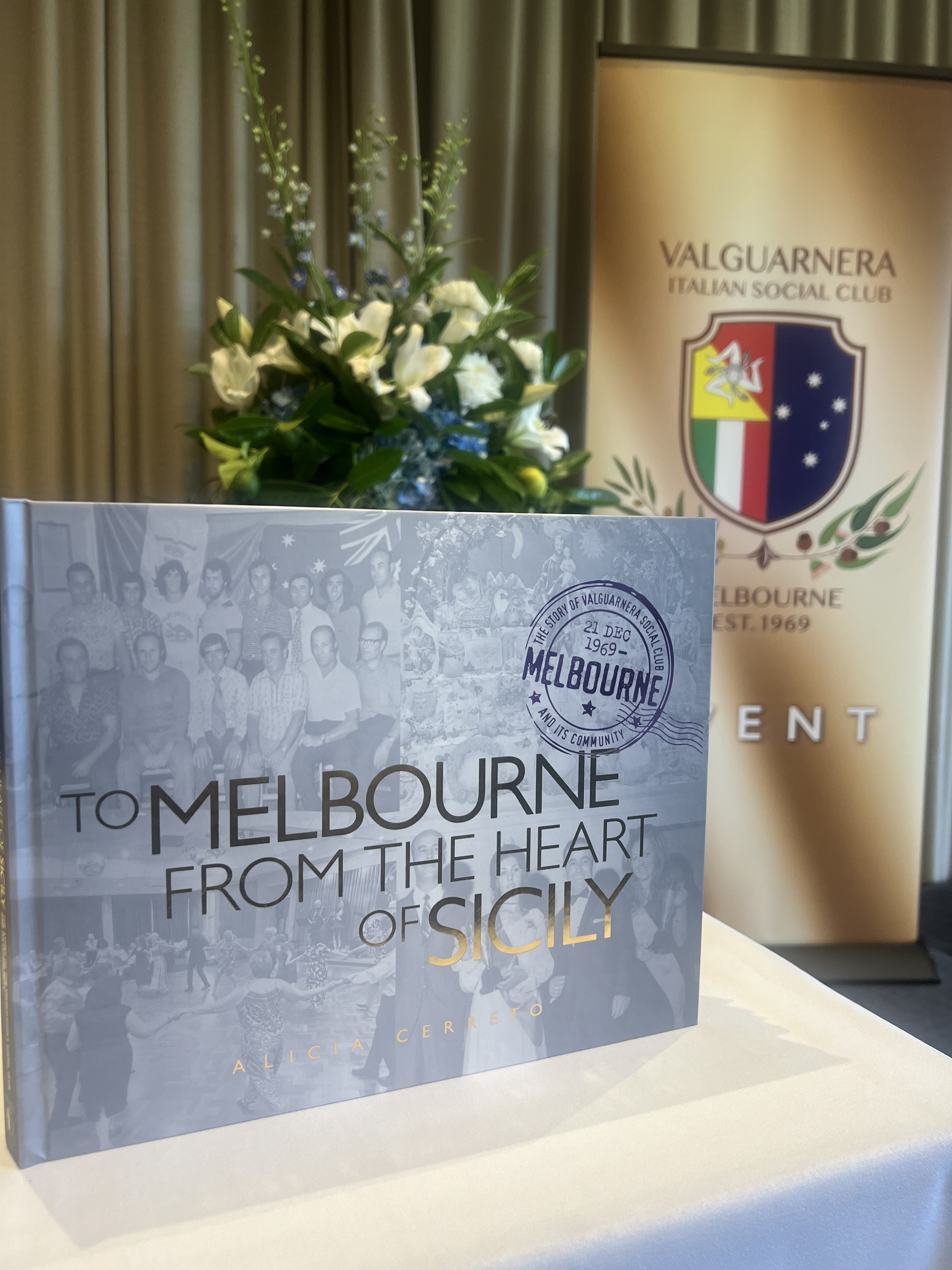
To Melbourne from the heart of Sicily: The story of the Valguarnera Italian Social Club and its Community unveils the stories of migrants from Valguarnera Caropepe who arrived in Melbourne after World War II. The book explores how they maintained cultural identity, community connections and traditions through the establishment of the Valguarnera Italian Social Club. Through oral histories, photographs, and archival records, the book highlights stories at risk of being lost as the first generation of migrants ages. It was a project that stretched across a couple of years, and one I felt very connected to with my own Sicilian nonno and his stories.

The project involved drawing on Club archives and public records, undertaking oral history interviews and working alongside many Club members who brought this book to fruition, especially the History Book Editorial Committee. The Committee contributed local knowledge, translations, the collection of photographs and objects from community members, caption writing and cultural perspectives that shaped the final publication. Community storytelling was essential in reconstructing the Club’s history and capturing experiences absent from official sources.

This collaborative process was important ensure that we were meeting the needs of the audience, especially the older generation who would recognise themselves in the pages. We were also focussed on ensuring that future generations would understand where they came from, the journeys that brought their forebears to Australia and the importance the Club held in their lives and their settlement here.

The book was launched in February 2026 by Tina Arena, whose family was part of the founding of the Club. The event brought together members past and present and inspired emotional recollections and recognition of the past and the role the club had in their lives as children, teens and adults. As she launched the book Tina reflected, ‘The book stands as a tangible testament to resilience, cohesion and pride in identity—a bridge between past and future, between Sicily and Australia, between those who left with little certainty and those who now carry forward their legacy.’
How to employ a historian

Are you coming up to an organisation’s anniversary and thinking about how to recognise the occasion?

A professional historian is the ideal person to work with you on this event, but it can be hard to know where to start! My first suggestion is to start the conversation with your team and your historian.

What story do you want to tell as part of this event?

Who is your audience?

And what is the end product?

It might be a book that you want to write, and exhibition to display your story, or a digital approach that allows for your story to be shared across platforms.

You can read more about commissioning a history courtesy of Professional Historians Australia here: https://www.historians.org.au/commissioning-history

Please be in touch with me here to start the conversation.

History keynotes and workshops

I recently gave a keynote on Australian History (key events and their cultural impact) to a group of Grade 5 and 6 students. It was a great request from a school as a way to begin their history inquiry unit and spark off a term of investigation and development.

There are lots of ways to engage students with history, and sometimes having an outsider come to visit can help kickstart the conversation with your class. My work with schools has included sessions where students solve a real-life ‘history mystery’, guiding classes to put on a history exhibition and facilitating an oral history program with local seniors or family members.

Get in touch here for a conversation about what might suit you and your school.

Pics from National Museum Australia, Australian War Memorial and AIATSIS

Free history resources for primary schools

I’m thrilled to share these History Education Resources for primary teachers, put together with the team at Glen Eira City Council

The videos and accompanying teacher resources explore everyday life in the past, significant people and places and First Nations histories. They offer practical skills sessions on topics such as interpreting a variety of historical sources, interviewing people and continuity and change in the local community. They highlight the work and collections of local historical societies and feature interviews with Glen Eira’s Aboriginal Community Officer and the History and Heritage team members.

The Council are making these resources freely available to schools and whilst they are connected to the local area they are still useful beyond Glen Eira’s borders!

Take a look here: https://lnkd.in/gfxm4WPW

Travellers Aid to the rescue!

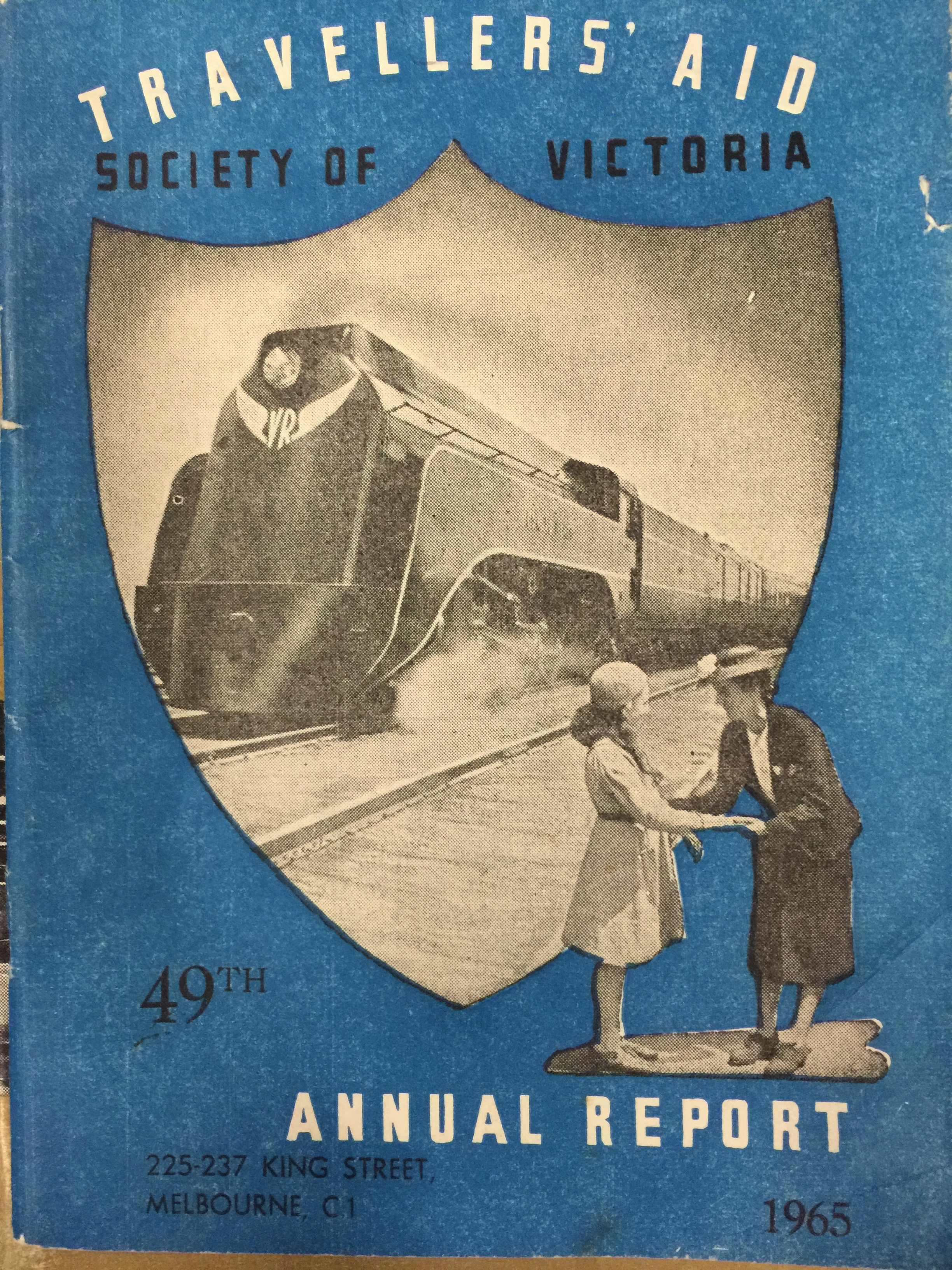
Travellers Aid is turning 100 this year. I’ve been working with Way Back When Consulting Historians to uncover the stories of this fabulous organisation that provides an essential service to people as they travel in and around Melbourne. Channel 9 visited the Travellers Aid’s ‘office under the stairs’ at Southern Cross Station and had a sneak peak of their daily work. It aired on Channel 9 on Sunday, 15 May.  Have a look at it here. The book and travelling exhibition are underway and will be out later this year.Country to City

Alice Meyer von Forell

alice meyer.jpg

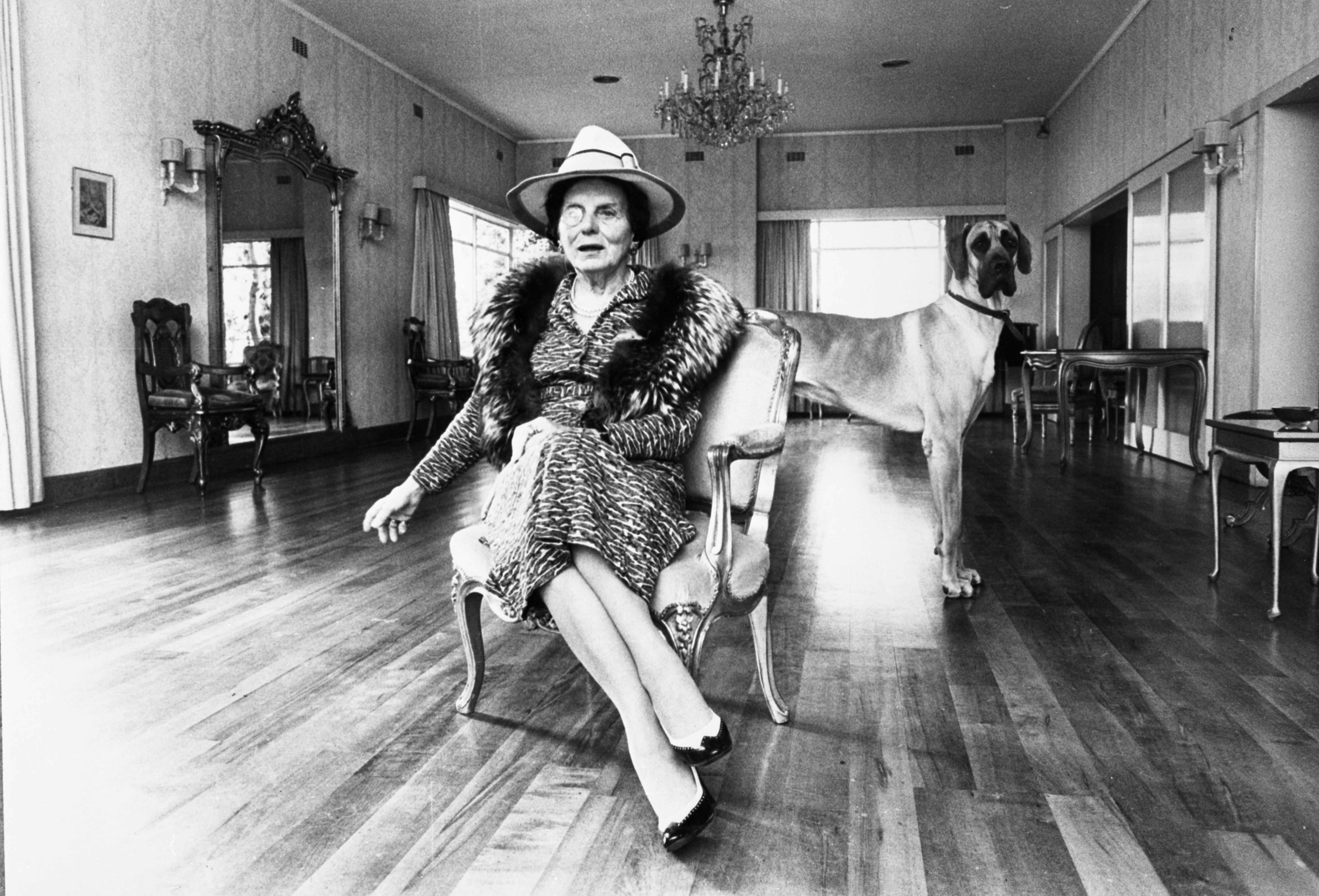
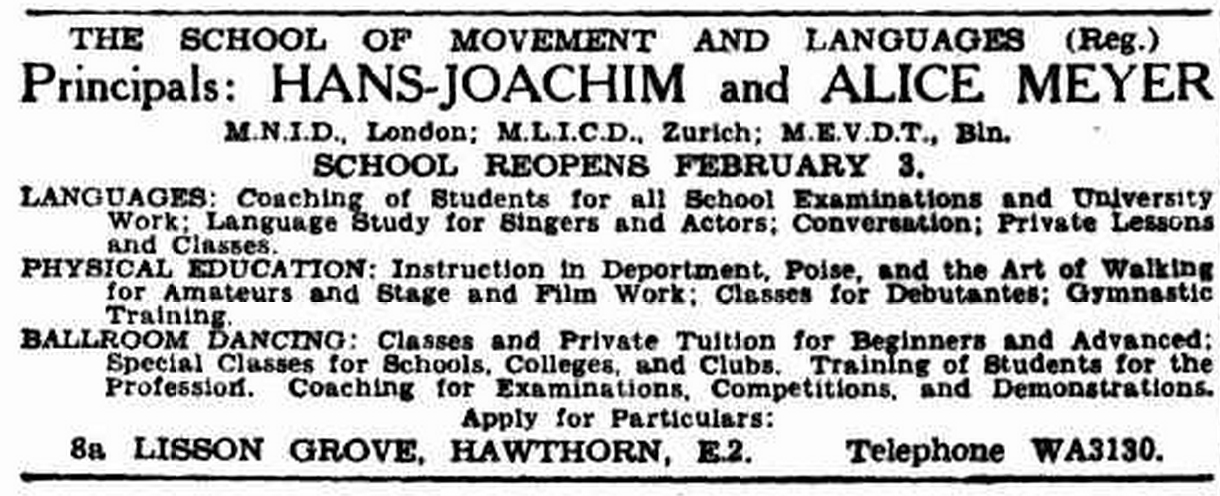
Amidst the stories of hosting parties for diplomats, raising money for charity and opening dance schools in Germany and in Australia, Alice Meyer von Forell and her husband Hans were interned in wartime Australia as enemy aliens. I talked about Alice’s life for last year’s booked out PHA (Vic) event, ‘No Place for a Woman’ , but I’m still finding more explore in her journey.

Those who knew Alice in later life knew little of the difficult start she and Hans had had in Australia, first taken from their home in the middle of the night, then imprisoned and interned. After a few months Alice and Hans were released but had to live 100 miles from the coast (because they were still deemed a security risk). After a few months of this ‘freedom’ Hans was interned again.  Alice has always struck me as a strong and determined woman and this shines through in her letters (held at the National Archives of Australia) as she advocated for her and her husband’s freedom from internment.

This February I will be reprising my talk on Alice for a PHA (Vic) event to be held in Ballarat at The Gold Museum. BOOKED OUT! 

You can read more about Alice on the Hello Ballarat blog.

Image above via The Age (Alice and her dog Caesar in their Lisson Grove ballroom) and below via The Argus (an early advertisement for Alice and Hans’ school).
Screenshot 2014-10-11 14.31.41.jpg

Uncle Tony

This week I’m researching my Uncle Tony. He wasn’t someone I knew well, but there were a few family legends that I have heard about him. One of them was that during the war he was on an island in the Pacific where he caught a fish for dinner. He said ‘I wish I had a lemon to have with this fish’. Next minute, a lemon washed up on the shore…

I haven’t been able to definitively prove this family story! But I have been learnt that it is a little more likely than it sounds.

4 Screenshot 2015-10-05 20.32.30

Norm Ley

Today I’m researching Leslie Norman Ley, on what would have been his 100th birthday. He was a pilot in World War II, a University of Melbourne alumnus, a father, a husband and an accountant. See more in the National Archives of Australia http://bit.ly/1P8ynPj

Screenshot 2015-10-02 17.47.32